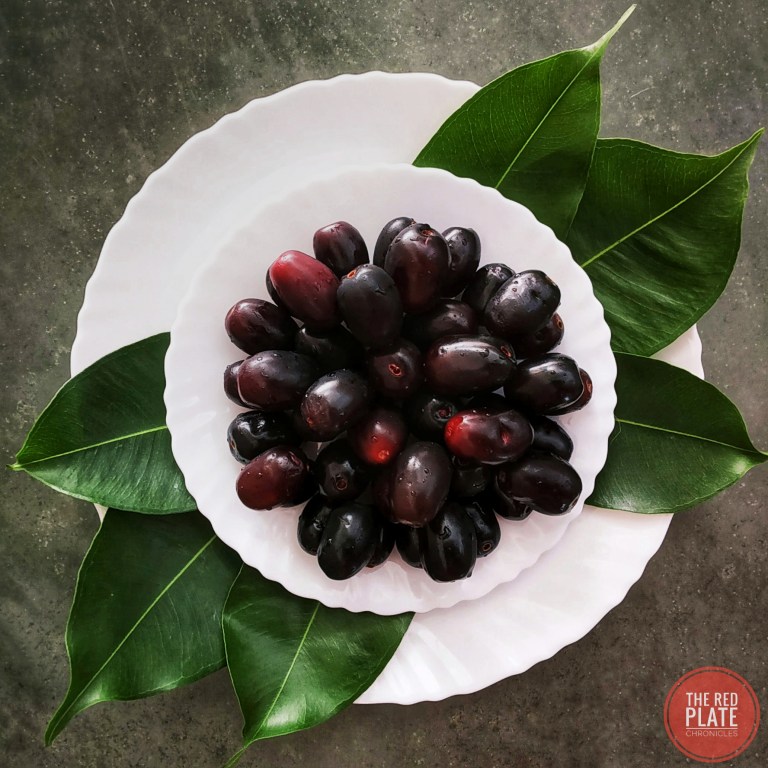
While I figure out what else to make with litchis, look which summer fruit has made its appearance in the markets of Bangalore – Jamun💜
.
Jamun also known as black plum, malabar plum or java plum is native to Indian subcontinent, adjoining regions of Southeast Asia, China and Queensland. It is said to have been spread overseas from India by Indian emigrants and at present is common in former tropical British colonies.
.
Have you ever listened carefully to the priest chanting, “…jambudvipe bharatkhande…” while making sankalp before a puja? It refers to, “India in the continent or island of jamuns”. This makes more sense now that I know jamuns are native to Indian subcontinent.
.
A few days ago, during my morning jogs, I noticed few people lurking under a tree tugging on branches, plucking the fruit & popping them in. Later, realised that it is a jamun tree that has begun bearing fruits this year hence the new found interest of people in this tree this year.😆
.
Last year around this timeframe, on my way home I saw few electric company linemen climbing up their long mobile ladders trying to reach higher branches of a tree. I thought they were trying to trim the branches before monsoon. Turned out they were aiming at plucking jamuns from a tree.🙆 With time, jamun trees are becoming a rare sight in urban areas which explains the interest of these guys.😉
.
The seed of the fruit is used in various alternative healing practices such as ayurveda, unani & Chinese medicine. The extract of the fruit and seeds are found be effective against hyperglycemia.
.
Wine and vinegar are also made from jamuns. They are rich in vitamin A and vitamin C.
.
Stay tuned to find out what I make with these purple fruits.
Kannada word of the day is “Nerale Hannu” (Jamun fruit).😊
Love
M❤️
 The Red Plate Chronicles